“Design is not just what it looks like and feels like. Design is how it works.”
Steve Jobs
At Cavendish Church of England Primary School, Design and Technology is a practical, creative subject in which children learn to identify problems, develop ideas and turn those ideas into purposeful products.
We want our pupils to become confident designers and makers who are willing to experiment, solve problems, take appropriate risks and learn from things that do not work first time. Through DT, children develop creativity alongside practical and technical knowledge, learning that successful design requires thought, perseverance, precision and evaluation.
Design and Technology reflects our school vision: We Learn. We Love. We Belong. Children learn new skills and technical knowledge, work thoughtfully with and for others, and consider how the things they design can meet people's needs and contribute positively to the world around them.
Our Design and Technology Curriculum
We use the Kapow Primary Design and Technology mixed-age curriculum, carefully organised into a two-year Cycle A and Cycle B programme to meet the needs of our mixed-age classes.
The curriculum is aligned with the National Curriculum and enables children to build knowledge and practical expertise progressively as they move through school.
Children learn through the key elements of the design process:
- researching and exploring existing products and user needs;
- designing purposeful products against clear criteria;
- making using appropriate materials, tools and techniques;
- evaluating their own work and existing products; and
- developing increasingly sophisticated technical knowledge.
Across the curriculum, children encounter areas including structures, mechanisms and mechanical systems, textiles, electrical systems and cooking and nutrition.
Children revisit important knowledge and processes over time, applying them with increasing independence, accuracy and complexity.
Our Mixed-Age Class Structure
Our DT curriculum is carefully organised around the mixed-age structure of Cavendish.
Robins – EYFS, Year 1 and Year 2
Children develop the foundations of designing and making through construction, exploration, joining materials and practical problem-solving. Reception children access developmentally appropriate experiences rooted in the EYFS, while Year 1 and Year 2 pupils begin to design purposeful products, select materials and tools and evaluate what they have made.
Wrens – Year 3 and Year 4
Children build upon their earlier experiences, developing greater accuracy and technical understanding. They explore a wider range of materials and processes and are increasingly expected to explain their design decisions, follow plans, solve problems during making and evaluate their products against clear criteria.
Owls – Year 5 and Year 6
Children work with increasing independence and precision. They draw upon previous technical knowledge, consider the needs of users carefully, make informed decisions about materials and processes and adapt their designs in response to testing and evaluation.
Our two-year rolling programme ensures full curriculum coverage while avoiding unnecessary repetition. Teachers adapt scaffolding, modelling, vocabulary and expectations of independence according to pupils' prior knowledge and needs.
The Design Process
At Cavendish, children learn that good design rarely happens in one attempt.
They are taught to move thoughtfully through a process of exploring, designing, making, testing and evaluating. Designs may change as children encounter challenges, test their ideas or discover that another solution would work more effectively.
We want children to understand that adapting and improving a design is an important part of being a designer.
Practical work therefore develops not only technical skills, but also resilience, creativity, decision-making and problem-solving.
The Cavendish 5 in Design and Technology
As in all subjects at Cavendish, our Cavendish 5 underpin high-quality teaching and learning in DT.
Retrieval
Children revisit previous technical knowledge, vocabulary, tools, materials and processes before applying them to new design challenges.
I Do, We Do, You Do
Teachers explicitly model techniques and safe tool use, practise processes alongside pupils and gradually move children towards greater independence.
Purposeful Practice
Children have opportunities to practise important practical techniques before applying them meaningfully within a finished product.
High-Quality Questioning
Children are encouraged to explain design choices, compare materials, predict what might happen, solve problems, justify decisions and evaluate the effectiveness of their work.
Feedback
Live feedback, testing and evaluation help pupils refine techniques, identify problems and make purposeful improvements while designing and making.
Design and Technology in the Early Years
Design and Technology begins naturally within the EYFS through children's curiosity, creativity and desire to make things.
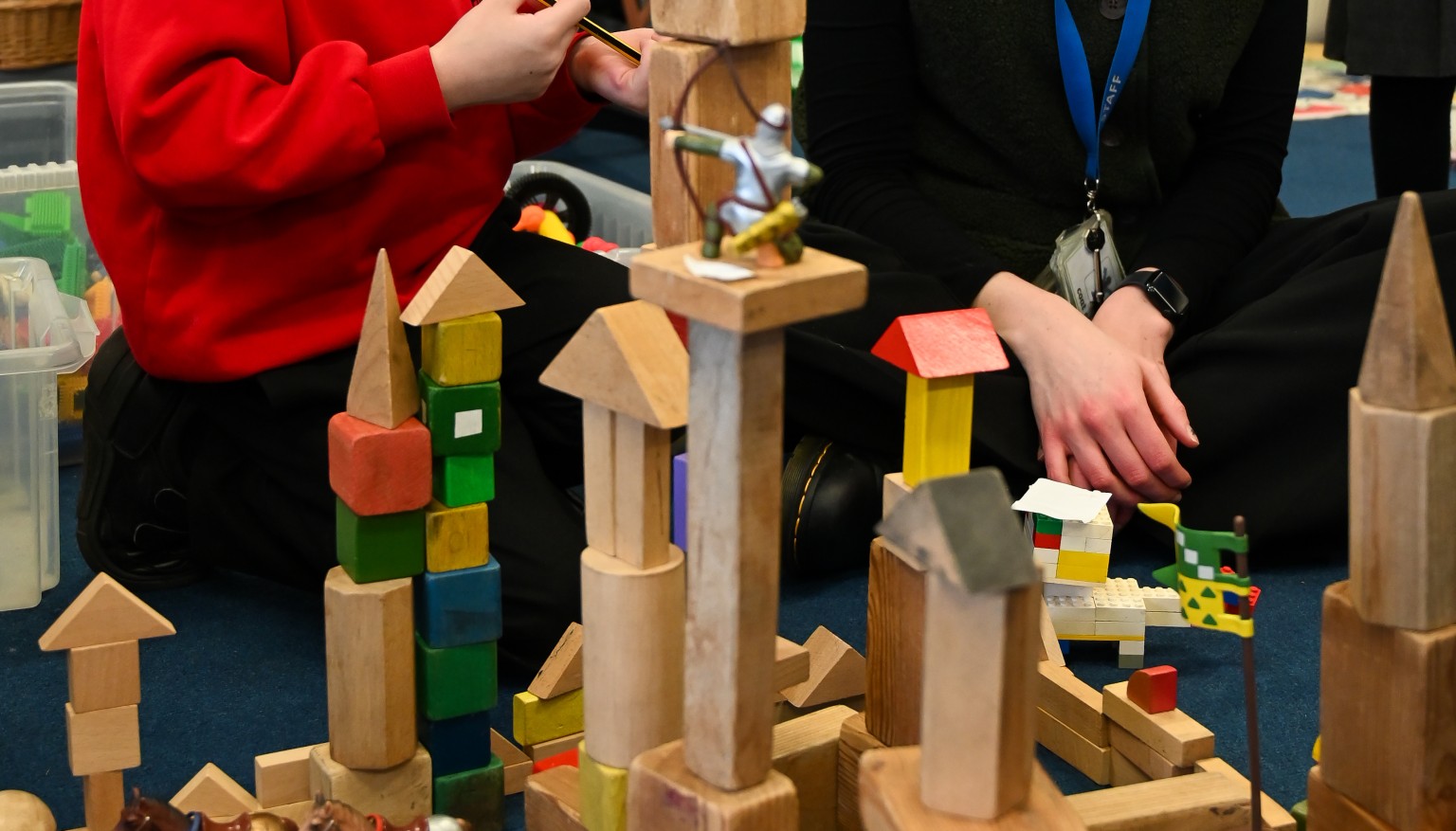
Reception children explore construction kits, materials, joining techniques, tools and simple mechanisms through purposeful play and adult-guided experiences.
They are encouraged to talk about what they want to make, select materials, try different approaches and reflect upon whether their creation works as they intended.
These experiences particularly support Expressive Arts and Design, Physical Development and Understanding the World, while establishing important foundations for the National Curriculum in Key Stage 1.
Cooking and Nutrition
Cooking and nutrition form an important part of the Design and Technology curriculum.
Children develop an understanding of where food comes from and the principles of a healthy and varied diet. As they progress through school, they learn practical food preparation skills and begin to understand how ingredients can be selected and combined to create different outcomes.
Pupils are taught to work safely and hygienically and to understand that designing food products, like any other form of design, involves considering purpose, ingredients and the needs of the intended user.
Inclusion in Design and Technology
DT is a subject in which every child can be a designer and maker.
Teachers remove barriers through explicit modelling, visual instructions, vocabulary support, adapted equipment, carefully sequenced practical steps, additional rehearsal and appropriate adult or peer support.
Scaffolding is used to enable pupils to access the same important design and technical knowledge rather than replacing the intended learning with a less ambitious task.
Children who are secure in their learning are challenged through greater independence, precision, increasingly sophisticated design decisions, problem-solving and evaluation.
Assessment in Design and Technology
Assessment takes place throughout the design and making process.
Teachers use questioning, observation, pupil discussion, design work, practical outcomes and evaluation to understand what children know and can do.
We consider children's ability to:
- draw upon relevant technical knowledge;
- explain and communicate design ideas;
- select appropriate materials, tools and techniques;
- use tools safely and increasingly accurately;
- solve problems during the making process;
- test products against their intended purpose; and
- evaluate and improve their work.
Assessment helps teachers identify knowledge and practical skills that need further development before children encounter more complex design challenges.
Importantly, assessment in DT values the thinking and decision-making behind a product, rather than simply judging how attractive a finished item looks.
Design and Technology and Our Christian Vision
Design and Technology provides valuable opportunities for children to consider purpose, people and responsibility.
Children learn that effective design begins by considering the needs of others. They are encouraged to make thoughtful choices, use materials responsibly, minimise unnecessary waste and recognise that good design can improve people's everyday lives.
This connects naturally with our Christian understanding of stewardship, service and care for others and creation.
Through DT, children experience the satisfaction of turning an idea into something real while developing the resilience to persevere, adapt and improve when challenges arise.
The Impact of Design and Technology at Cavendish
By the time children leave Cavendish, we want them to see themselves as capable, creative and thoughtful designers and makers.
They should be able to draw upon a developing body of technical knowledge, generate and communicate ideas, select appropriate tools and materials, make with increasing accuracy and evaluate their work critically.
Most importantly, we want children to approach practical challenges with curiosity, resilience and confidence — understanding that problems can be explored, ideas can be improved and thoughtful design can make a positive difference.
We Learn. We Love. We Belong.